Africa Copper Belt Expansion News: Projects Shaping 2026 Supply
Africa copper belt expansion news is becoming essential reading for researchers tracking how new mines, smelter upgrades, and cross-border infrastructure will shape 2026 supply. From the DRC and Zambia to logistics, power, and ESG execution, this article examines the projects, risks, and investment signals redefining one of the world’s most important copper growth corridors. As copper demand rises on the back of grid expansion, electrification, and energy-transition manufacturing, the latest Africa copper belt expansion news also offers a wider industrial read-through: mine supply alone is no longer the key variable, because transport capacity, water access, metallurgical recovery, social licensing, and policy predictability now determine whether promised tonnage becomes saleable cathode or concentrate.
Why Africa copper belt expansion news now matters more than simple reserve growth
The Central African Copperbelt, spanning mainly the Democratic Republic of Congo and Zambia, remains one of the few regions able to deliver meaningful near-term copper volume growth before 2026. Yet the significance of current Africa copper belt expansion news goes beyond announcing another pit, shaft, or processing line. The market is judging which projects can move from resource statement to stable commercial output under real operating constraints.
Recent developments point to a shift from isolated mine expansion toward corridor-wide optimization. Brownfield upgrades are often advancing faster than greenfield megaprojects because they can leverage existing roads, skilled labor pools, concentrators, and export channels. At the same time, smelter and refinery ambitions suggest that regional stakeholders want more value captured locally rather than relying exclusively on offshore processing. That makes Africa copper belt expansion news highly relevant not only for metals markets, but also for power engineering, rail rehabilitation, border management, and heavy-equipment deployment.
The 2026 supply picture is being shaped by a cluster of connected projects
The most credible supply gains for 2026 are likely to come from a combination of mine expansions, debottlenecking programs, and infrastructure improvements rather than from a single headline project. In the DRC, large-scale copper-cobalt operations continue to refine processing capacity and recovery rates, while Zambia is pushing mine restarts, deeper ore access, and investment-friendly positioning to rebuild output momentum.
What makes the latest Africa copper belt expansion news especially important is the degree of interdependence. A concentrator upgrade may require new substation capacity. A mine extension may depend on fleet reliability and parts availability. Smelter economics may hinge on sulfur handling, environmental permits, and regional concentrate balance. In industrial intelligence platforms such as 无, this kind of linkage increasingly matters more than standalone production targets because execution risk accumulates across the chain.
Key project categories influencing 2026 output
What is driving the latest Africa copper belt expansion news
Several forces are converging to accelerate investment decisions and operational upgrades across the region. Some are global, such as tighter long-term copper fundamentals, while others are highly local, including regulatory adjustments and infrastructure partnerships.
- Energy transition demand is strengthening the strategic case for copper supply diversification outside traditional producing regions.
- High-grade ore zones and large existing resource bases make brownfield expansion economically attractive when compared with riskier frontier development.
- Regional governments are seeking greater downstream capture through refining, local procurement, and infrastructure-linked policy frameworks.
- Equipment modernization, automation, and digital maintenance tools are improving productivity where fleet management was previously a bottleneck.
- Global investors increasingly reward projects with transparent ESG pathways, especially around water, community impact, and traceability.
This is why Africa copper belt expansion news should be read as a systems story, not merely a mining story. Expansion is being driven by commodity economics, but it is being filtered through engineering readiness, power reliability, and institutional credibility.
Where the main risks could delay 2026 supply expectations
Despite the positive momentum, not every announced ton will arrive on schedule. The core challenge is execution discipline across mining, processing, logistics, and compliance. In many cases, ore availability is less uncertain than the ability to move material efficiently from pit to plant and then to export markets.
Power volatility remains one of the most important risks in Africa copper belt expansion news. Intermittent electricity supply can reduce concentrator utilization, force greater diesel dependence, and erode cost competitiveness. Logistics is another critical variable. Border delays, limited rail slots, road congestion, and seasonal disruptions can increase working capital needs and shipment uncertainty. ESG performance also matters more than before. Weak community engagement or insufficient environmental controls can slow permitting, damage project continuity, and affect financing conditions.
High-impact risk areas to watch
- Grid instability and delayed power projects
- Smelter feed imbalance between concentrate production and processing capacity
- Regulatory changes affecting royalties, exports, or ownership structures
- Water access and tailings management compliance
- Availability of critical spares, heavy machinery uptime, and maintenance backlogs
How Africa copper belt expansion news affects adjacent industrial activity
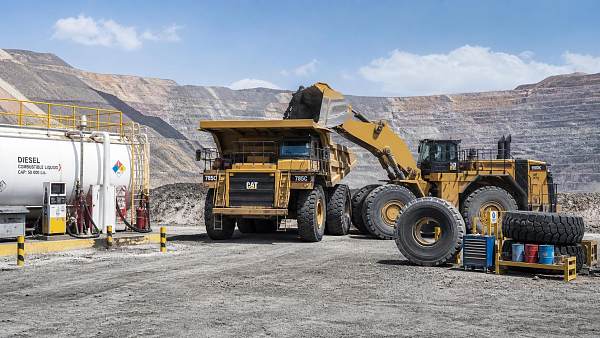
The broader significance of Africa copper belt expansion news lies in the secondary demand it creates across industrial sectors. Mine growth typically triggers procurement for drilling systems, haulage fleets, crushing circuits, dewatering equipment, liners, pumps, explosives services, fuel storage, and condition-monitoring tools. It also stimulates demand for engineering studies, contractor mobilization, and compliance technologies linked to mine safety and emissions reduction.
For metallurgy and processing, expansion translates into more interest in plant debottlenecking, reagent optimization, and recovery-improvement projects. For logistics and construction, it supports corridor investment in bridges, road surfacing, workshops, warehousing, and customs-linked digital systems. Even where a direct product proposition is not central, the operational themes tracked by 无 reflect a growing market preference for measurable reliability, lifecycle cost visibility, and ESG-compatible equipment choices.
What to monitor in the next phase of Africa copper belt expansion news
Looking ahead, the most useful signals will come from evidence of commissioning progress rather than from promotional capacity figures alone. Investors and industry analysts should focus on whether projects are achieving stable throughput, power security, transport continuity, and environmental compliance at commercial scale.
- Track monthly or quarterly ramp-up performance rather than nameplate targets.
- Watch rail, road, and border corridor improvements as closely as mine construction updates.
- Assess whether smelter additions are synchronized with concentrate quality and volume.
- Review power contracts, captive generation plans, and renewable integration where available.
- Compare ESG disclosures against local operating realities, especially water, waste, and community stability.
Practical judgment framework for 2026 supply
The most credible takeaway from current Africa copper belt expansion news
The strongest conclusion is that 2026 African copper growth is likely, but it will be uneven and selective. The winners will not necessarily be the projects with the largest published resources. They will be the operations that combine ore quality with dependable power, realistic logistics planning, maintainable equipment fleets, and resilient stakeholder management. In that sense, Africa copper belt expansion news is best understood as a scoreboard of execution quality.
The next practical step is to monitor project updates through an integrated lens: mine development, processing readiness, corridor access, and ESG follow-through should be evaluated together. That approach gives a more accurate read on who can actually shape 2026 supply and which developments are still vulnerable to delay. For anyone following industrial growth, resource security, and heavy-engineering demand, sustained attention to Africa copper belt expansion news will remain essential over the coming quarters.
Recommended News
 Sep 10, 2026What Compliance Documents Should a Mining Equipment Supplier Provide?What documents should a mining equipment supplier provide for compliance proof? Explore essential certificates, safety records, testing evidence, and traceable documentation.
 Sep 07, 2026Do Mining Equipment Safety Standards Differ by Country?Do different countries use different standards for mining equipment safety? Explore ISO, MSHA, CE, ATEX, and local compliance rules before ordering equipment.
 Sep 05, 2026How Do You Calculate Total Cost of Ownership for Mining Machinery?How to calculate total cost of ownership for construction machinery in mining? Explore TCO factors, downtime, fuel, maintenance, and lifecycle savings.
 Sep 01, 2026How Reliable Are Mining Equipment Manufacturers’ Performance Claims?How reliable are performance claims from mining equipment manufacturers? Learn how to verify OEM data, benchmark reliability, and turn claims into measurable commitments.