Which high-capacity mining excavators actually deliver the best cost-per-ton performance for 2026 projects?
As global mining operations pivot toward 2026 efficiency targets, selecting high-capacity mining excavators that maximize cost-per-ton performance has become a strategic priority. Navigating the complex mining supply chain requires robust mining intelligence to evaluate equipment durability and lifecycle value. Whether you are monitoring competitive mining tenders in Africa or collaborating with a trusted construction machinery dealer, procurement success hinges on integrating expert mining engineering services and high-quality heavy machinery parts. By prioritizing reliable heavy machinery repair and partnering with a certified mining safety equipment supplier, project stakeholders can ensure operational resilience and long-term profitability in an increasingly demanding global resource landscape.
Analyzing the Core Drivers of Cost-Per-Ton Performance in 2026
The metric of cost-per-ton remains the ultimate benchmark for mining efficiency, but as we approach 2026, the variables influencing this figure have grown significantly more complex. Historically, procurement teams focused primarily on the initial capital expenditure (CapEx) and the machine’s raw horsepower. However, in the current economic climate, operational expenditure (OpEx)—encompassing fuel efficiency, maintenance intervals, and operator productivity—now accounts for nearly 65% to 75% of the total lifecycle cost of a high-capacity excavator. For Tier-1 mining conglomerates, a reduction of even $0.02 per ton can translate into millions of dollars in annual savings across a large-scale iron ore or copper project.
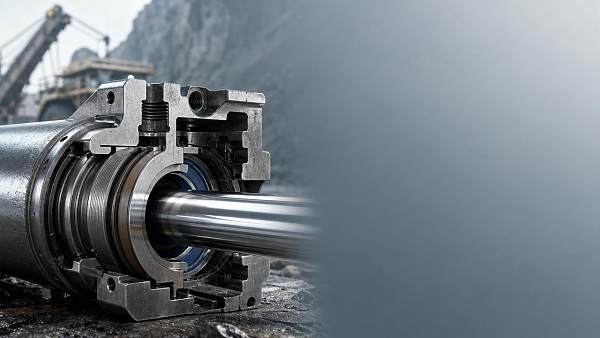
Reliability and uptime have emerged as the primary determinants of competitive performance. Modern 2026-era excavators are engineered to achieve availability rates exceeding 92%, a significant jump from the 85% industry average seen a decade ago. This improvement is largely driven by advanced hydraulic systems and structural reinforcements that allow for 24/7 operations in extreme environments. When assessing machinery, procurement directors must evaluate the "mean time between failures" (MTBF) and the accessibility of critical components for rapid repair. A machine that delivers high breakout force but suffers from frequent hydraulic seal failures will quickly erode the project’s margin through unplanned downtime and excessive parts consumption.
Energy transition is another critical factor shifting the cost-per-ton paradigm. With the global mining sector under pressure to meet stringent ESG targets, the integration of diesel-electric hybrid drives and fully electric tethered systems is no longer a luxury but a strategic necessity. These systems can reduce onsite carbon emissions by 15% to 30%, while simultaneously lowering fuel costs by up to 20% depending on the local energy grid's profile. For information researchers and business evaluators, the challenge lies in balancing these higher-cost technologies against the long-term savings in carbon taxes and fuel logistics, particularly in remote regions where diesel transport adds a significant premium to every liter consumed.
Furthermore, the human element—specifically operator efficiency—is being augmented by digital assistance. Modern excavators now feature integrated payload management systems that ensure every bucket is filled to within 98% of its rated capacity, preventing both under-loading (which wastes fuel) and over-loading (which causes premature wear on haul trucks). This precision, backed by real-time data analytics, ensures that the fleet operates at its "sweet spot" of maximum throughput and minimum wear. As we look toward 2026, the synergy between heavy-duty hardware and intelligent software is what will define the market leaders in high-capacity excavation.
Technical Benchmarking: Comparing High-Capacity Excavator Classes
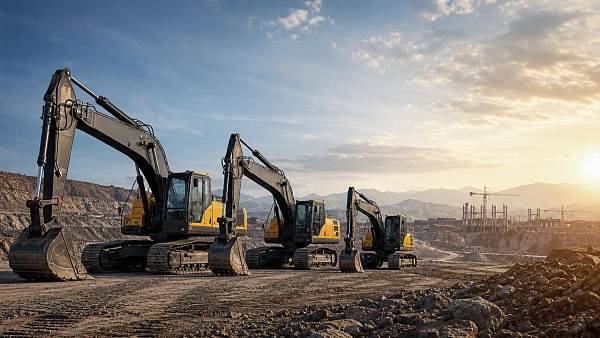
To determine which machines truly deliver the best performance, one must look past the brochure specifications and analyze duty-cycle data. The market for high-capacity excavators is generally divided into the 100-ton to 300-ton "utility" mining class and the 400-ton to 800-ton "ultra" class. While the ultra-class machines offer massive throughput, their cost-per-ton performance is highly dependent on being paired with the correct haulage fleet. A mismatch between excavator bucket size and truck bed capacity can lead to "half-cycles," where the excavator must perform an extra movement to finish a load, increasing the cycle time by 15-20 seconds and significantly raising the cost per ton moved.
Engineering scrutiny of these machines reveals that hydraulic pressure optimization is a key differentiator. Machines operating at 320 to 350 bar with variable-displacement pumps tend to offer much better fuel-to-force ratios than older fixed-flow designs. This technical nuance allows for faster swing speeds and smoother digging cycles, even in high-density materials like taconite or hard-rock copper ore. Procurement personnel should prioritize models that utilize "intelligent hydraulics" which automatically adjust flow rates based on the material resistance, thereby protecting the engine from unnecessary strain and extending the service life of hydraulic hoses and cylinders.
The data in the table above underscores the importance of fleet synchronization. Choosing an 800-ton excavator for a project that only utilizes 150-ton haul trucks would result in severe operational inefficiencies, as the truck's suspension would be stressed by the massive bucket loads, while the excavator would spend 50% of its time idling waiting for the next truck. For 2026 projects, the trend is moving toward "right-sizing"—selecting the smallest machine that can meet the production target in a 3-to-4 pass loading cycle. This approach minimizes the capital footprint while maximizing the utilization rate of the assets.
Strategic Procurement: Beyond Technical Specifications
For procurement directors and business evaluators, the hardware is only half the story. The strength of the local dealership network and the availability of high-quality heavy machinery parts are often more critical than the machine's theoretical breakout force. In remote mining hubs such as the African copper belt or the Western Australian Pilbara, a 48-hour delay in parts delivery can cost a project upwards of $500,000 in lost production. Therefore, a strategic procurement evaluation must include a deep dive into the manufacturer’s regional logistics capability and their commitment to local inventory holding.
Contractual flexibility is also becoming a hallmark of 2026 procurement. Many top-tier manufacturers and dealers now offer "guaranteed availability" contracts or "cost-per-hour" service agreements. These models shift the risk of mechanical failure back onto the OEM or dealer, incentivizing them to perform proactive maintenance and stock critical components onsite. For distributors and agents, this shift requires a move toward service-oriented business models, where the sale of the machine is just the beginning of a multi-year technical partnership. Evaluating these service-level agreements (SLAs) is a core task for any business evaluator looking to de-risk a long-term resource project.
Moreover, compliance with international safety and engineering standards (such as ISO 3450 for braking or ISO 10262 for protective structures) is a non-negotiable requirement for modern mining tenders. Ensuring that the equipment supplier is certified for mine safety not only protects the workforce but also safeguards the project from regulatory shutdowns and insurance liabilities. As ESG reporting becomes more granular, the ability to track every machine's safety record and emission data via digital twin technology is becoming a standard expectation for institutional investors and global mining firms.
Maintenance and Digital Twins: The Future of Lifecycle Management
The transition from reactive to predictive maintenance is perhaps the single largest contributor to cost-per-ton optimization for 2026. High-capacity excavators are now equipped with hundreds of sensors that monitor everything from hydraulic fluid temperature to vibration levels in the slew bearing. This data is fed into a "digital twin"—a virtual model of the machine—which uses machine learning to predict when a component is likely to fail. By scheduling a replacement during a planned shutdown rather than waiting for a catastrophic failure in the pit, miners can increase the effective life of their equipment by 5,000 to 10,000 operating hours.
Effective lifecycle management also involves the strategic use of remanufactured parts. In an effort to reduce waste and lower costs, many mining operations are partnering with certified heavy machinery repair facilities that can rebuild engines and transmissions to "as-new" standards for 60% of the cost of a new unit. This circular economy approach not only supports ESG goals but also provides a buffer against global supply chain disruptions that may affect the lead times for new components. For procurement teams, identifying "Tier-1" repair partners is just as important as selecting the machinery manufacturer itself.
As the table indicates, the move toward data-driven maintenance is the most effective way to lower the cost-per-ton and extend the working life of the asset. For 2026, the industry standard is shifting toward "Condition-Based Monitoring" (CBM) as a mandatory requirement in project tenders. This allows mining engineering services to provide remote diagnostics and troubleshooting, often resolving issues before the machine operator even notices a performance drop. For dealers and agents, offering these technical services is becoming the primary way to differentiate themselves in a competitive hardware market.
FAQ: Optimizing Mining Excavator Selection for 2026
How do environmental regulations impact excavator selection in 2026?
Environmental regulations, particularly carbon pricing and emission limits (such as Tier 4 Final or Stage V), significantly influence the choice of power plants. For 2026, many operators are choosing diesel-electric or fully electric models to hedge against future carbon taxes. These machines not only reduce the project's carbon footprint but also offer lower noise levels and reduced heat rejection, which is particularly beneficial in deep underground or confined open-pit operations. Procurement directors must calculate the "Internal Rate of Return" (IRR) based on both fuel savings and potential carbon credits.
What role does automation play in reducing cost-per-ton?
Automation is a game-changer for consistency. While a skilled operator can achieve peak performance, an autonomous or semi-autonomous excavator can maintain 95% efficiency throughout a 12-hour shift without fatigue. This consistency eliminates the "efficiency drop-off" that typically occurs at the end of a shift, ensuring a steady flow of material to the crushers. Furthermore, automated systems protect the machine from "abusive" operation, such as stalling the hydraulics or over-speeding the engine, which extends the life of critical heavy machinery parts and reduces the frequency of repairs.
How should procurement teams evaluate dealer support in remote regions?
Evaluation should be based on three primary metrics: Parts Fill Rate (PFR), Field Service Response Time (FSRT), and Technical Training Support. A dealer should ideally maintain a PFR of over 90% for critical wear parts and have field service technicians available within 12 to 24 hours of a call. Additionally, for 2026 projects, the dealer’s ability to provide digital connectivity support and remote monitoring is just as important as their mechanical repair skills. Negotiating these parameters during the initial purchase is essential for safeguarding long-term operational resilience.
Summary and Strategic Action for Global Mining Stakeholders
Achieving the best cost-per-ton performance in 2026 requires a holistic approach that integrates high-performance engineering with sophisticated data analytics and strategic supply chain management. The era of focusing solely on the "biggest bucket" is over; the new winners in the mining sector are those who prioritize fleet synchronization, energy efficiency, and predictive maintenance. By leveraging technical benchmarking data and insisting on the highest safety standards, procurement directors can ensure that their heavy-machinery investments deliver sustained value over a 15-to-20 year lifecycle.
For information researchers, procurement personnel, and business evaluators, the path forward involves a deep commitment to verifiable data and expert engineering scrutiny. Partnering with a technical gateway like G-MRH allows stakeholders to stay ahead of market trends, monitor regional tender activities, and benchmark their fleets against the world's leading operations. Whether you are expanding an existing site or launching a greenfield project in a frontier market, the right mining intelligence is your most valuable asset in the quest for operational excellence and ESG compliance.
To optimize your upcoming 2026 mining projects and secure the most efficient heavy machinery solutions tailored to your specific geological and economic needs, we invite you to consult with our industry experts. Explore our technical repository and benchmark your procurement strategy against the latest international engineering standards. For more information on optimizing your fleet or to get a customized technical assessment, contact us today to bridge the gap between high-performance hardware and strategic project success.
- heavy machinery
- excavators
- construction machinery
- mining engineering
- mining safety
- mining tenders
- mining intelligence
- mining supply chain
- heavy machinery parts
- mining engineering services
- construction machinery dealer
- heavy machinery repair
- mining safety equipment supplier
- mining tenders in Africa
- mining excavators
- mining operations
Recommended News
 Jun 08, 2026Hydraulic Oil Seals: Common Failure Causes and FixesHydraulicoilseals fail from contamination, heat, misalignment, and pressure spikes. Learn the real causes, proven fixes, and smarter maintenance steps to cut leaks and downtime.
 May 26, 20262026 Global Excavator Market Share: Who Leads and Why It MattersGlobal excavator market share in 2026 reveals who leads, why Chinese brands are rising, and how mining, infrastructure, and fleet technology are reshaping global equipment strategy.
 May 25, 2026Construction Equipment Trade Fairs Worth Tracking in 2026Construction equipment trade fairs worth tracking in 2026: discover the top global and regional events shaping equipment launches, supplier trends, and smarter procurement decisions.
 May 24, 2026Machine Control System Accuracy in Excavators: What Matters MostMachine control system accuracy in excavators depends on GNSS, sensors, calibration, hydraulics, and site conditions. Learn what truly impacts grade control performance and smarter equipment selection.