Tailings Management Policy Standards That Shape Permit Risk
Why do tailings management policy standards now decide permit risk so early?
Tailings management policy standards have moved from back-office compliance into the center of project approvals.
That change is not just regulatory fashion. It reflects harder lessons from dam failures, water stress, social opposition, and investor pressure.
In practical terms, permit risk now starts long before construction. It begins when authorities test whether a project team understands consequence classification, closure design, and governance accountability.
A weak tailings narrative can slow environmental review, trigger redesign, or force additional geotechnical submissions.
A stronger one tends to reduce uncertainty, especially where water management, seismic exposure, and downstream receptors are sensitive.
This is why tailings management policy standards matter across the broader resource and heavy-industry chain.
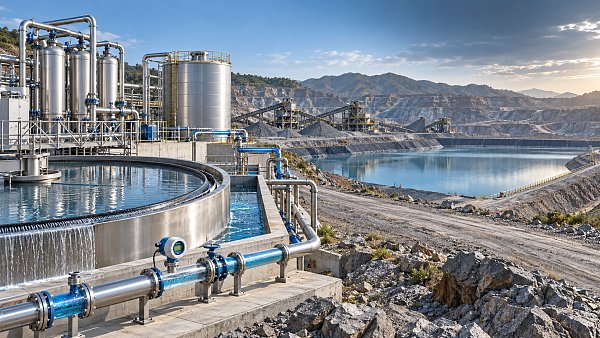
Mining, mineral processing, bulk handling, and heavy equipment planning are now reviewed through a combined lens of engineering reliability and ESG defensibility.
Within that environment, policy intelligence platforms such as G-MRH are useful because they connect equipment benchmarks, regulatory shifts, and operating context instead of treating them as separate issues.
What do regulators usually mean by tailings management policy standards?
The phrase usually covers more than one document. That is where many teams misread the permit challenge.
Regulators often look for alignment across corporate policy, site design criteria, operating controls, emergency planning, and independent review arrangements.
In many jurisdictions, the benchmark conversation starts with the Global Industry Standard on Tailings Management, then expands into local mining law, water law, dam safety rules, and closure obligations.
That means compliance cannot be reduced to a single certificate or one engineering report.
A workable interpretation of tailings management policy standards usually includes the following:
- Clear ownership for accountable executives and technical decision makers.
- A documented basis for siting, embankment design, and deposition strategy.
- Water balance assumptions that match climatic and operational reality.
- Monitoring, trigger levels, and response protocols that can actually be operated.
- Closure and post-closure measures considered at permit stage, not deferred.
Simple language helps here. Authorities want to see whether the standard can govern daily decisions, not just satisfy a board presentation.
Which parts of the standard most often influence approval timing?
Not every section of tailings management policy standards affects permit timelines equally.
More often, delays come from a few recurring pressure points.
The table below summarizes where reviewers usually focus first and why those points can change permit risk.
In real reviews, water and governance issues often create more delay than embankment geometry alone.
That surprises teams that focus only on design factors of safety.
Tailings management policy standards are read as proof of decision quality over the full life cycle.
How should a project judge whether its standard is actually permit-ready?
A permit-ready standard is not the longest one. It is the one that survives technical challenge without exposing internal gaps.
A useful test is to ask whether the policy can be traced into drawings, operating procedures, contracts, and closure assumptions.
If the standard says independent review is required, the review gate, scope, and authority should already be visible.
If the standard commits to water resilience, the site water balance should show dry, normal, and extreme scenarios.
A practical readiness check usually covers five questions:
- Does the standard reflect local legal duties, not only global guidance?
- Can the design basis be defended using current geotechnical and hydrological data?
- Are operational controls matched to actual staffing, instruments, and site access?
- Do mine planning and processing assumptions agree with tailings storage staging?
- Have closure commitments been costed and incorporated into approvals strategy?
Where resource projects rely on large fleets, crushing circuits, pumping systems, or remote haulage routes, that alignment becomes even more important.
Equipment throughput, water demand, and maintenance windows can all reshape the tailings profile that regulators review.
Where do teams most often get tailings management policy standards wrong?
The common mistakes are rarely dramatic. They are usually small disconnects that accumulate into a credibility problem.
One frequent error is adopting global language without adapting it to site conditions.
Another is assuming the environmental permit team can finish the work without continuous input from geotechnical, processing, water, and closure specialists.
More subtle problems appear when the policy says one thing, while vendor data, mine schedules, or operational plans point somewhere else.
The following warning signs deserve attention:
- Consequence categories copied from another project without updated receptor mapping.
- Closure concepts that ignore long-term seepage, covers, or water treatment needs.
- Monitoring plans that depend on instruments not budgeted or not suited to climate conditions.
- Construction sequencing that conflicts with equipment mobilization or seasonal access limits.
- Board-level commitments that site procedures cannot practically deliver.
This is where comparative intelligence matters.
A repository such as G-MRH adds value when it places standards beside equipment duty cycles, regional tender realities, and regulatory patterns across mining jurisdictions.
That broader picture helps reveal whether a policy is merely well written or genuinely executable.
Do stronger tailings standards increase cost, or reduce total project exposure?
The honest answer is both, depending on when the standard is integrated.
If tailings management policy standards are introduced late, costs rise fast because redesign, extra studies, and procurement changes arrive under schedule pressure.
If they shape concept selection early, they usually reduce total exposure even when capital costs increase.
For example, a more conservative water strategy may require additional pumping capacity, storage controls, or monitoring systems.
Yet it may also lower the probability of permit conditions that constrain throughput later.
A tighter governance model can add review effort. It can also prevent undocumented field changes that become legal exposure.
A useful comparison is not cheap versus expensive. It is controllable risk versus unmanaged downstream cost.
Across open-pit mining, mineral processing, and bulk material handling, permit delay often costs more than robust front-end policy work.
What is the smartest next step before a permit submission?
Start with a disciplined gap review, not a document refresh for its own sake.
Put the current tailings management policy standards beside the actual design package, operating model, and approval pathway.
Then test where assumptions break.
The most effective pre-permit checklist usually includes:
- Validate local legal mapping against global tailings commitments.
- Confirm that mine plan, process plant output, and storage staging still align.
- Recheck water balance inputs against current climate and operating assumptions.
- Verify the independent review schedule before key permit lodgement dates.
- Stress-test closure logic, including cost, landform stability, and post-closure water quality.
Tailings management policy standards shape permit risk because they reveal how a project will make decisions under technical and social pressure.
When the standard is coherent, site-specific, and connected to operations, approvals tend to move with fewer surprises.
When it is generic or fragmented, every regulator question becomes more expensive.
The next move is straightforward: review the standard against design reality, compare it with current jurisdictional expectations, and resolve weak links before they enter the permit record.
Recommended News
 Sep 25, 2026How to measure mine water recycling efficiency before upgrading a systemMine water recycling efficiency: learn how to measure recovery, water quality, reliability, losses, and operating costs before choosing a system upgrade.
 Sep 11, 2026How to size a mine wastewater treatment plant for peak flowMine wastewater treatment plant sizing guide: calculate peak flow, equalization, contaminant loads, storm storage, and scalable capacity for reliable compliance.
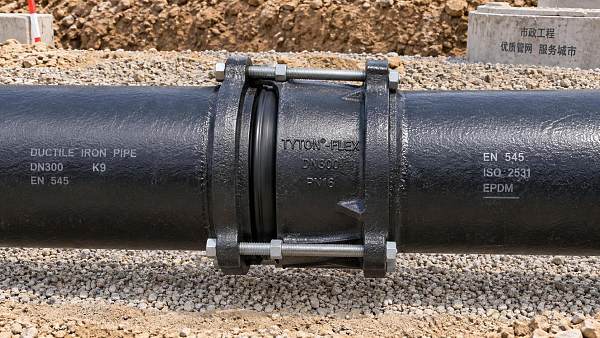
 Sep 14, 2026Preventing Joint Leakage in Ductile Iron Pipe Installations: Torque Specifications, Gasket Compatibility, and Field Verification ChecksPrevent ductile iron pipe joint leakage with proven torque specs, gasket compatibility checks, and field verification—avoid rework, failures, and compliance risks.
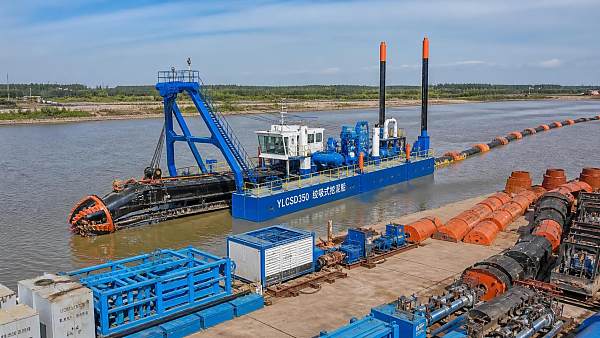
 Aug 18, 2026How to Evaluate YLCSD350 Cutter Suction Dredger Price for Project FitYLCSD350 cutter suction dredger price should be judged by project fit, not headline cost. Learn how to compare scope, output, delivery, and operating risk before you buy.