Mining Technology Trends Reshaping Site Operations in 2026
Mining technology is rapidly transforming site operations in 2026, from autonomous excavators and smarter crushing plants to data-driven mining engineering across open-pit mining and underground mining. For researchers and operators alike, understanding how mining equipment, construction machinery, heavy machinery, and earthmoving machinery are evolving is essential to improving safety, productivity, and lifecycle performance in modern resource projects.
For procurement teams, site supervisors, maintenance planners, and technical evaluators, the challenge is no longer simply choosing larger machines or adding more fleet hours. The real question is how to align automation, energy transition targets, duty-cycle demands, and regulatory compliance into a practical operating model that performs under harsh field conditions.
Across copper, iron ore, coal, bauxite, lithium, and rare earth projects, 2026 is shaping up as a year in which digital control layers and mechanical reliability must work together. G-MRH tracks this shift through equipment benchmarking, standards-based comparison, and site-level intelligence that helps operators and decision-makers evaluate what actually improves throughput, safety, and total cost of ownership.
Autonomous and Assisted Equipment Is Moving from Pilot to Production
The most visible mining technology trend in 2026 is the transition from isolated automation trials to broader production deployment. Autonomous haul trucks, drill rigs, and assisted excavators are no longer limited to a handful of flagship mines. More operations are adopting mixed fleets where 20% to 60% of production equipment runs with varying levels of autonomy, remote supervision, or machine guidance.
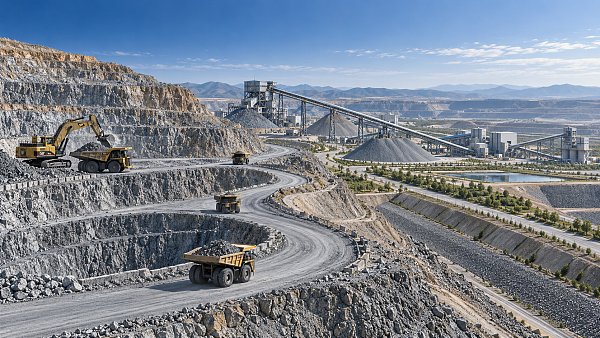
For open-pit mining, the strongest use case remains repetitive haulage over controlled routes. Autonomous haul trucks can reduce variability in cycle times, especially on routes above 1.5 km where speed discipline, traffic control, and fatigue management matter. In underground mining, tele-remote loaders and drilling platforms are expanding because they improve safety in high-risk headings, drawpoints, and unsupported zones.
Operators should note that “autonomous” does not always mean fully driverless. In many mines, the practical step is assisted operation: collision avoidance, payload optimization, auto-dig sequencing, and onboard fatigue analytics. These features often deliver measurable gains before a site is ready for full autonomous dispatch integration.
The operational value depends on more than hardware. Reliable wireless coverage, dispatch logic, berm integrity, haul road maintenance, and geofencing discipline are critical. Mines that underestimate these prerequisites often see underperformance in the first 6 to 12 months, even when the equipment itself is capable.
What changes on site when autonomy scales
- Shift supervision moves from direct machine control to exception management, route authorization, and fleet coordination.
- Maintenance teams need stronger capability in sensors, network diagnostics, software updates, and actuator calibration.
- Safety procedures expand to include exclusion zones, communication failover, and response rules for sensor or GPS degradation.
- Production planning becomes more data-driven, with dispatch systems balancing queue time, fuel use, and payload consistency.
A common procurement mistake is treating automation as an add-on rather than an operating system change. Buyers should assess whether OEM support includes integration with existing fleet management software, operator training over at least 3 phases, and spare-parts coverage for sensors, cameras, radar, and compute modules.
The table below outlines how sites typically compare manual, assisted, and autonomous deployment paths in 2026.
The main takeaway is that autonomy should be deployed according to site maturity, not industry pressure. Mines with disciplined haul road management, predictable traffic corridors, and stronger maintenance data typically capture value faster than operations that buy advanced equipment without upgrading operating procedures.
Smarter Crushing, Processing, and Material Handling Are Reducing Throughput Losses
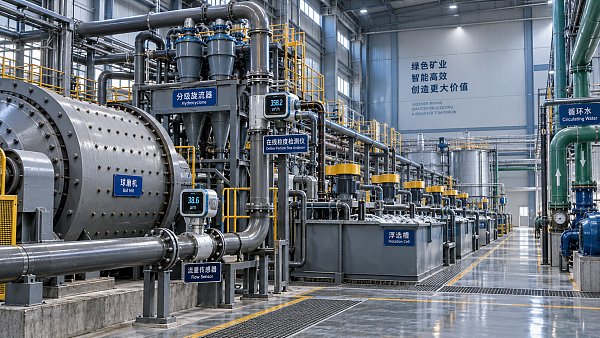
Another defining trend in 2026 is the intelligence layer being added to crushing plants, conveyors, screens, feeders, and mineral processing circuits. Instead of reacting to blockages, wear, or unstable feed after losses occur, modern plants are using sensor-based control to keep throughput within tighter operating bands. In many facilities, even a 2% to 4% throughput improvement has a major annual production impact.
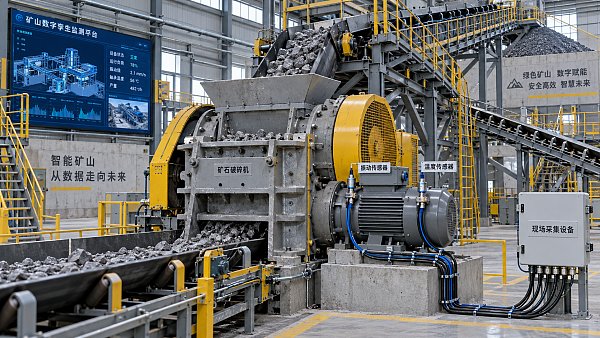
Smarter crushing plants combine liner wear monitoring, vibration analytics, power draw trends, feed-size imaging, and automated choke control. This is especially valuable in operations with variable ore hardness, seasonal moisture swings, or inconsistent blasting fragmentation. The goal is not only maximizing tonnes per hour, but reducing the frequency of stoppages that create maintenance backlogs and downstream bottlenecks.
Bulk material handling is also being redesigned around reliability. Conveyor drift detection, idler temperature monitoring, and transfer-point dust control are increasingly linked to central dashboards. On long overland conveyors or multi-transfer systems, these controls help prevent small faults from escalating into 6-hour or 10-hour production interruptions.
For operators, the key shift is from point equipment thinking to circuit thinking. A crusher may be high-performing on paper, but site value depends on how it interacts with stockpiles, screens, feeders, pumps, and haulage timing. G-MRH emphasizes benchmark evaluation at the system level because site bottlenecks often occur at interfaces rather than inside a single machine.
Priority control points in 2026 plants
The highest-value digital upgrades are usually concentrated in four areas: feed stability, wear prediction, transfer reliability, and energy monitoring. These are practical levers because they influence both production and maintenance spending. On sites with abrasive ore or highly variable run-of-mine feed, liner and chute wear forecasting can materially improve shutdown planning over 30-day and 90-day windows.
The following comparison shows where smart controls tend to create operational gains in processing and handling systems.
The table highlights a simple rule: mines should digitize the constraints that repeatedly limit tonnes, not every asset at once. A phased rollout over 2 to 4 quarters usually produces better returns than a wide deployment that overwhelms maintenance and operations teams with alerts they cannot act on quickly.
Common implementation mistake
A frequent issue is installing monitoring tools without defining alarm thresholds, inspection workflows, and spare-parts response times. If a site cannot translate vibration, temperature, or wear signals into a 24-hour, 72-hour, or next-shutdown action plan, the data remains interesting but operationally weak.
Decarbonization Is Reshaping Fleet Selection and Infrastructure Planning
By 2026, decarbonization in mining is no longer limited to ESG reporting. It is directly affecting the selection of mining equipment, heavy machinery, and site infrastructure. Buyers are increasingly comparing diesel, trolley-assist, battery-electric, and hybrid pathways according to haul profile, ventilation burden, charging strategy, and total lifecycle cost rather than initial machine price alone.
In open-pit operations, the economics often depend on ramp length, elevation gain, and power availability. Trolley-assist solutions can be attractive on high-volume uphill haul roads if a mine has stable grid access and long mine life. In underground mining, battery-electric equipment is gaining traction because it can reduce heat, diesel particulate exposure, and ventilation demand in confined areas.
However, fleet electrification is not a simple swap. Charging windows, substation capacity, cable routing, workshop safety procedures, and technician competence all affect project readiness. A site may be technically suitable for electric loaders, but not ready for a large battery fleet if charging congestion creates queue time during peak production hours.
For procurement and engineering teams, the better question is which parts of the fleet should decarbonize first. Many mines begin with support vehicles, light-duty underground units, or fixed plant electrification, then move to primary production assets once the power strategy, spare-parts planning, and maintenance training have matured over 12 to 24 months.
Practical fleet assessment criteria
- Map duty cycles by payload, gradient, and daily operating hours before comparing drivetrain options.
- Measure energy infrastructure readiness, including charging location, redundancy, and peak load management.
- Estimate maintenance changes, especially for high-voltage safety, thermal management, and software diagnostics.
- Review ventilation and heat implications in underground mines where energy decisions affect worker conditions directly.
A balanced selection framework helps prevent overcommitting to technology that the site cannot yet support. In some cases, a diesel fleet with advanced idle management and optimized dispatch still performs better in the short term than a poorly planned electrification project.
Where operators should be cautious
The main risk is assuming every mine follows the same pathway. Orebody geometry, local grid stability, ambient temperature, and maintenance capability vary widely. A realistic adoption roadmap should define 3 stages: pilot validation, infrastructure scaling, and fleetwide integration, each with clear acceptance criteria for availability, safety, and operating cost.
Digital Twins, Predictive Maintenance, and Engineering Data Are Becoming Core Operating Tools
Among the most important mining technology trends for 2026 is the rise of digital twins and predictive maintenance as practical site tools rather than abstract innovation concepts. For mines managing large excavators, haul trucks, crushers, mills, pumps, and conveyors, the value of a digital model lies in connecting operating conditions to maintenance decisions, not just visualizing assets on a screen.
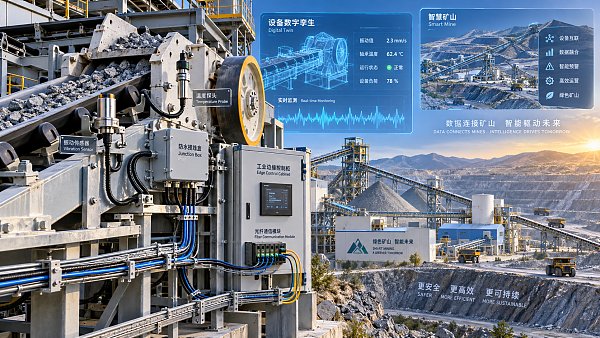
A useful digital twin combines design parameters, current operating data, maintenance history, and performance thresholds. When properly configured, it helps planners estimate remaining useful life, identify duty-cycle deviations, and schedule inspections before a failure disrupts production. This matters when a single critical asset can affect thousands of tonnes per shift.
Predictive maintenance also improves spare-parts strategy. Instead of carrying every major component in inventory, mines can prioritize high-risk assemblies by wear trend, vibration pattern, fluid condition, and temperature behavior. This reduces both stock obsolescence and emergency procurement pressure, which is especially important in remote operations with long logistics lead times of 4 to 10 weeks.
For information researchers, the strongest benchmark is not whether a site has a digital platform, but whether the platform changes maintenance timing, failure frequency, and shutdown planning. Data without intervention logic does not create value. G-MRH focuses on engineering relevance: alarm hierarchy, inspection workflows, reliability metrics, and lifecycle cost implications.
What a workable predictive maintenance stack includes
A reliable stack usually includes condition sensing, historian integration, maintenance work-order linkage, and operating context such as payload, hours, temperature, or ore abrasiveness. The point is to understand why a component degrades under specific site conditions, not merely to record that degradation exists.
The following table shows how mines can prioritize predictive maintenance by asset criticality and intervention speed.
The strongest operational outcome comes when predictive maintenance is tied to maintenance execution discipline. Sites that review critical alarms daily, validate sensor quality weekly, and recalibrate thresholds monthly tend to get more value than sites that collect data passively without closing the loop through planning and repair.
How Buyers and Operators Should Evaluate Mining Technology in 2026
For both researchers and equipment users, selecting mining technology in 2026 requires a broader evaluation framework than traditional capex comparison. The most relevant decision factors now include interoperability, reliability under duty-cycle stress, support response time, software maintainability, ESG fit, and lifecycle cost over 5 to 10 years. Machines that look comparable in specification sheets can perform very differently once integrated into real site conditions.
Procurement teams should separate core questions into operational, technical, and commercial layers. Operationally, ask whether the system fits haul profiles, ground conditions, ore variability, and workforce capability. Technically, assess standards alignment, critical component accessibility, diagnostic depth, and compatibility with existing fleet or plant software. Commercially, compare warranty scope, parts stocking strategy, training packages, and field service response windows.
This is where a benchmarking platform such as G-MRH becomes valuable. By organizing intelligence across open-pit and underground mining, mineral processing, heavy earthmoving, bulk handling, and green mining technologies, procurement and operations teams can compare assets using engineering evidence rather than marketing claims alone.
A disciplined evaluation process is especially important for Tier-1 buyers, EPC contractors, and site teams preparing tender documents. Clear definitions of duty cycle, payload range, ambient conditions, maintenance intervals, and compliance expectations reduce variation during vendor comparison and make post-award performance review much easier.
A practical 5-step evaluation checklist
- Define the production target, equipment role, and expected operating envelope, including hours per day and material conditions.
- Screen for compliance with relevant standards, site safety requirements, and environmental obligations.
- Compare maintainability factors such as access points, diagnostic tools, technician training, and spare-parts lead times.
- Run lifecycle cost scenarios covering fuel or power use, wear components, service intervals, and downtime risk.
- Validate supplier support model, including commissioning, remote diagnostics, and on-site response commitments.
FAQ: What operators most often ask
How long does implementation usually take?
For focused upgrades such as condition monitoring or assisted operation modules, rollout may take 6 to 12 weeks. Wider deployments involving autonomy, charging infrastructure, or plant control integration often require 6 to 12 months, especially when communications, training, and safety procedures must be redesigned.
Which metrics matter most during selection?
The most useful metrics are availability, cycle consistency, mean time between failures, maintenance labor hours, energy intensity, and spare-parts lead time. Buyers should also track how quickly the supplier can restore the asset after a control, sensor, or drivetrain fault.
Are advanced systems suitable for brownfield sites?
Yes, but scope matters. Brownfield sites often benefit from staged deployment: first connectivity and monitoring, then guided operation or process optimization, and only later higher-level automation. This approach reduces disruption and helps maintenance teams adapt without overloading the site.
Mining technology in 2026 is reshaping site operations through smarter equipment, more stable processing circuits, cleaner fleet strategies, and engineering data that supports faster decisions. The mines that gain the most are not necessarily those buying the most advanced machines first, but those matching technology to site readiness, operator capability, maintenance discipline, and long-term production objectives.
For organizations evaluating mining equipment, construction machinery, heavy machinery, and digital operating systems, a standards-based, lifecycle-focused comparison is essential. G-MRH helps researchers, operators, and procurement teams navigate these choices with deeper benchmarking across performance, compliance, reliability, and cost optimization.
If you are planning a fleet upgrade, processing plant modernization, or a technology sourcing review for 2026 projects, contact us to obtain tailored benchmarking insight, compare solution pathways, and explore a more practical route to safer and more productive mining operations.
Recommended News
 Oct 16, 2026How digital twins are changing smart mineral processing plantsExplore smart mineral plant news to discover how digital twins help optimize grinding, recovery, and water use—and what it takes to turn plant data into better operating decisions.
 Oct 21, 2026How Do Digital Twins Improve Mining Operations Monitoring?How does digital twin technology improve mining operations monitoring? Discover how connected data enables earlier fault detection, smarter maintenance, and better operational decisions.
 Oct 12, 2026How to apply an electronics guide when designing mine digital twinsApplication guide for electronics: build reliable mine digital twins with resilient sensors, edge systems, power, connectivity, and data validation strategies.
 Oct 06, 2026When mining intelligence services improve mine planning decisionsMining intelligence services help teams challenge assumptions, reduce supply and ESG risks, and build resilient mine plans with stronger equipment, processing, and scheduling decisions.