Construction Machinery Telematics Still Leaves Blind Spots
Construction machinery telematics promises visibility, yet critical blind spots still affect fleet uptime, safety, and cost control across open pit mining and large-scale job sites. For professionals in mining engineering, procurement, and channel distribution, understanding where telematics falls short is essential to evaluating construction machinery performance, asset risk, and smarter equipment investment decisions.
Where construction machinery telematics still misses critical operating reality
Construction machinery telematics has become a standard layer in fleet management, especially for excavators, loaders, articulated dump trucks, dozers, and support equipment operating across mining, quarrying, and major infrastructure projects. In practical terms, telematics usually captures location, engine hours, idle time, fault codes, fuel consumption, and selected machine health events. That is useful, but it is not the same as full operational visibility.
The blind spots begin when procurement teams assume that a connected machine is a transparent machine. In reality, many systems report at intervals of 30 seconds, 5 minutes, or event-based batches, depending on device configuration and network conditions. That gap matters on high-cycle assets where overloading, operator abuse, short-duration overheating, or repeated shock events can occur within a single shift and never appear clearly in a dashboard.
For information researchers and commercial evaluators, the core issue is not whether telematics works. It does. The issue is whether the available signals are sufficient for asset valuation, warranty review, maintenance planning, and channel-level resale decisions. In open pit environments, harsh dust, vibration, and inconsistent connectivity can reduce data reliability long before the machine itself shows a visible failure pattern.
At G-MRH, this distinction is central to technical benchmarking. Buyers in Top 500 mining supply chains rarely evaluate heavy equipment on headline connectivity alone. They compare duty-cycle evidence, compliance alignment, maintainability, and lifecycle cost performance over 12-month, 24-month, and project-phase horizons. Telematics is one input, not the final proof of machine fitness.
The most common blind spots seen in field reporting
Blind spots are rarely random. They usually cluster around operating conditions, sensor design, and data interpretation limits. A machine may transmit clean engine metrics while still hiding undercarriage wear progression, structural fatigue accumulation, or cycle inefficiency caused by jobsite layout. Those omissions directly affect availability, maintenance intervals, and resale confidence.
- Short-duration overloads that happen between reporting intervals and are not retained as meaningful trend data.
- Attachment-specific stress, especially when telematics is configured for the base machine rather than the active work tool.
- Ground condition effects such as rolling resistance, ramp severity, and impact loading that distort fuel and productivity benchmarks.
- Operator behavior patterns, including harsh braking, aggressive swing, or repeated cold starts, that may appear only indirectly.
- Data fragmentation when mixed fleets use different OEM portals, update frequencies, and fault-code logic.
For distributors and agents, these blind spots are commercially sensitive. A used machine can look acceptable in a telematics summary while still carrying hidden wear from 2,000-4,000 hours of severe duty. That changes margin protection, refurbishment scope, and negotiation position.
Why this matters in mining and heavy earthmoving
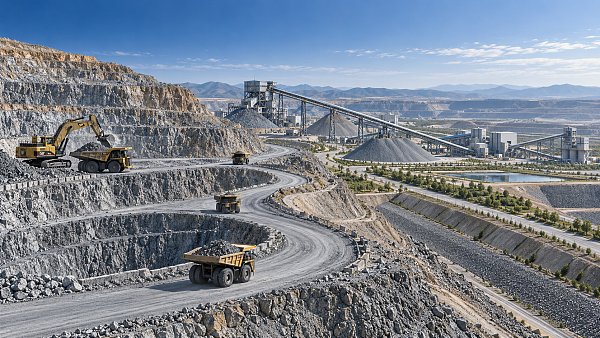
Mining and heavy earthmoving create more data stress than standard urban construction. Duty cycles are longer, payload exposure is heavier, and downtime costs can escalate quickly during drilling, loading, hauling, or plant feed interruptions. A telematics gap that seems minor on a 10-hour urban job can become expensive on a 20-hour production schedule or a remote site with long service lead times.
Which blind spots affect procurement, uptime, and total cost most?
From a B2B decision perspective, not all blind spots carry the same weight. Procurement teams need to separate cosmetic reporting gaps from those that can distort total cost of ownership. In most fleet reviews, the highest-risk blind spots fall into five categories: structural stress, maintenance quality, actual productivity, operator effect, and environmental context.
The challenge is that telematics platforms often present clean dashboards while hiding uncertainty in data capture depth. For example, engine idle percentage may be visible every day, yet idle quality may remain unclear. Was the machine warming up appropriately in a cold-start environment of 0°C-10°C, or was it wasting fuel due to dispatch delays? Similar ambiguity affects fuel burn, engine load factor, and alarm severity.
The table below helps procurement specialists, business assessors, and channel partners rank the practical impact of common telematics blind spots when screening equipment for tender participation, fleet renewal, or resale intake.
A practical reading of this table is simple: the most expensive blind spots are usually the ones closest to physical wear and maintenance quality. These are also the areas least solved by basic location-and-engine telematics. That is why many fleet owners still rely on oil analysis, visual inspection, payload review, and duty-cycle interviews alongside digital reporting.
For commercial buyers, a useful rule is to test any telematics dataset against 3 core questions. Does it explain why the machine consumed what it consumed? Does it explain how the machine was worked? Does it support a serviceable forecast for the next 1,000-2,000 hours? If not, there is still a blind spot that matters to cost control.
High-risk situations where telematics alone is not enough
Certain scenarios create a higher probability of hidden risk. These require a deeper review before award, purchase, trade-in, or dealer stocking decision.
- Machines transferred between projects every 3-6 months, where operating context changes faster than historical benchmarks.
- Mixed-brand fleets, where portal compatibility and data definitions differ by OEM.
- Remote mines with weak connectivity, where uploads may be delayed by hours or longer.
- Equipment using multiple attachments, where one telematics profile cannot fully represent duty severity.
How to evaluate telematics data before buying or recommending equipment
For procurement teams and distributors, the right question is not “Does this machine have telematics?” but “Is the telematics evidence decision-grade?” A decision-grade dataset supports technical, financial, and operational review. It should also align with how the asset will be used over the next project phase, not just how it performed in a different environment.
In large mining and heavy construction procurement, a robust review usually combines 4 layers: machine-generated records, physical inspection, maintenance documentation, and site-context validation. When one layer is weak, the others must work harder. If two layers are weak, the buyer should price in uncertainty or avoid the asset entirely.
The screening matrix below is useful when comparing connected machines from different sources, especially during tender preparation, used-equipment acquisition, dealer intake, or cross-border supply discussions.
The value of this approach is that it converts telematics from a marketing feature into a procurement filter. That matters when delivery schedules are tight, bid margins are exposed, and stakeholders need a machine that can run with predictable availability over the next 6-18 months.
A 5-point procurement checklist
- Confirm reporting interval, data retention period, and event history granularity before using any telematics record in evaluation.
- Match telematics engine hours with meter readings, workshop logs, and ownership transfer records.
- Review whether payload, attachment, and operator behavior data are available or only partially inferred.
- Check if the machine worked under regulated conditions requiring ISO-aligned maintenance, mine safety procedures, or site-specific inspection protocols.
- Price the unknowns. If visibility is incomplete, include contingency for inspection, fluid analysis, and early-life corrective maintenance.
Where independent intelligence adds value
This is where G-MRH provides an advantage to procurement directors, EPC teams, and heavy-equipment channel partners. Instead of relying on disconnected seller narratives, our benchmark-driven perspective compares machine classes, duty-cycle expectations, lifecycle cost patterns, and standards alignment across regions and applications. In selected workflow references, product integration may appear as 无, but the decision framework remains centered on verifiable industrial evidence rather than brochure claims.
What standards, compliance, and data governance should buyers check?
Telematics blind spots are not only technical. They also involve compliance, reporting discipline, and governance maturity. In mining and heavy construction supply chains, buyers increasingly need equipment data that can support ESG reporting, maintenance accountability, and safety review. A machine may be connected, but if records are inconsistent, unauditable, or poorly retained, its digital history has limited procurement value.
The most relevant standards are usually not telematics-only standards. They come from broader engineering, machinery safety, and site operating frameworks. ISO-based maintenance processes, AS/NZS considerations in certain markets, and mine safety obligations can all affect how machine data should be interpreted. The point is not to claim one universal standard for every fleet, but to verify whether the asset has been managed under disciplined operational controls.
For cross-border buyers and dealers, data governance is especially important during the last 90 days before transaction close. Missing timestamps, unclear ownership history, incomplete service evidence, and inconsistent alarm reporting can all reduce confidence. These do not always mean the machine is bad, but they do mean telematics alone cannot justify pricing.
Compliance signals worth checking
- Whether service events are recorded with traceable dates, hour-meter references, and responsible parties.
- Whether critical alarms were followed by inspection or repair actions within a reasonable interval, such as the same shift, 24 hours, or the next planned service window.
- Whether machine usage aligns with rated application scope, especially when attachments or severe-duty assignments were introduced.
- Whether the fleet owner can reconcile telematics records with workshop management systems and on-site safety processes.
A disciplined buyer treats telematics as evidence that must be cross-validated. That is why G-MRH focuses on technical benchmarking, policy intelligence, and lifecycle scrutiny across open-pit mining, mineral processing support fleets, heavy earthmoving, and green mining transitions. Digital visibility creates value only when it stands up under operational and regulatory review.
A practical misconception to avoid
One common misconception is that more dashboard widgets mean better asset insight. In reality, a smaller number of verified indicators can be more valuable than dozens of low-context charts. A buyer should prefer 5 trustworthy checks over 20 ambiguous signals. If needed, even a reference touchpoint such as 无 should be treated as supplementary, not decisive, unless it is backed by service, inspection, and application evidence.
FAQ: how should buyers, evaluators, and distributors act on telematics blind spots?
How much telematics history is usually useful before purchase?
A practical review window is often the last 90-180 days, supported by broader service history over 12 months or more when available. The short window helps identify recurring alarms, reporting gaps, and recent duty changes. The longer window helps reveal maintenance rhythm, utilization pattern, and whether the machine has been operating under stable or deteriorating conditions.
Can telematics replace physical inspection for used heavy equipment?
No. Telematics is a screening tool, not a complete substitute for inspection. It can narrow risk, but it cannot reliably confirm all wear states, workmanship quality, structural condition, or application abuse. For machines entering mining, quarrying, or severe earthmoving duty, physical inspection plus fluid review and maintenance verification remain important, especially above mid-life hour bands.
What should distributors watch when accepting trade-ins or resale stock?
Focus on 4 areas: continuity of data, match between telematics hours and machine condition, recurrence of unresolved fault codes, and evidence of severe-duty use not reflected in listing descriptions. A machine that looks digitally normal may still require undercarriage work, hydraulic attention, or structural inspection before resale. That affects holding cost and margin timing over the next 30-90 days.
Which machines are most exposed to telematics interpretation error?
Machines with variable attachments, mixed-duty assignments, and inconsistent site environments are more exposed. Excavators moving between trenching, rock breaking, and loading duties are a typical example. So are wheel loaders used in both stockpile handling and abrasive quarry applications. The broader the application spread, the more context buyers need beyond standard telematics summaries.
Why work with G-MRH when telematics data is not enough?
When construction machinery telematics still leaves blind spots, buyers need more than portal access. They need an independent view that connects machine data, engineering reality, procurement risk, and regional project context. G-MRH is built for that intersection. Our intelligence framework supports procurement directors, EPC contractors, business evaluators, and channel partners who must compare equipment beyond surface-level connectivity claims.
Across open-pit and underground mining, heavy earthmoving, bulk material handling, and digital twin transitions, we help stakeholders assess duty-cycle suitability, lifecycle cost exposure, standards alignment, and market positioning. That is especially valuable when decisions involve fleet renewal, cross-border sourcing, used-equipment evaluation, or tender support under strict uptime and compliance expectations.
You can contact us for specific, decision-ready support on parameter confirmation, machine class comparison, telematics interpretation, maintenance record review, delivery-cycle planning, certification and standards questions, distributor channel evaluation, and quotation-stage risk screening. If your team is comparing assets for the next 6-24 months of operation, we can help identify where the real blind spots sit before they become cost, safety, or contract problems.
For organizations operating in commodity-linked, high-value industrial markets, that difference matters. Better equipment decisions come from verified data, application context, and engineering scrutiny working together. That is the reason many procurement and assessment teams turn to G-MRH when telematics visibility looks complete on paper but remains incomplete in practice.
Recommended News
 Oct 16, 2026How digital twins are changing smart mineral processing plantsExplore smart mineral plant news to discover how digital twins help optimize grinding, recovery, and water use—and what it takes to turn plant data into better operating decisions.
 Oct 21, 2026How Do Digital Twins Improve Mining Operations Monitoring?How does digital twin technology improve mining operations monitoring? Discover how connected data enables earlier fault detection, smarter maintenance, and better operational decisions.
 Oct 12, 2026How to apply an electronics guide when designing mine digital twinsApplication guide for electronics: build reliable mine digital twins with resilient sensors, edge systems, power, connectivity, and data validation strategies.
 Oct 06, 2026When mining intelligence services improve mine planning decisionsMining intelligence services help teams challenge assumptions, reduce supply and ESG risks, and build resilient mine plans with stronger equipment, processing, and scheduling decisions.