Autonomous Mining Technology Growth: What Scales in 2026
Autonomous Mining Technology Growth: What Scales in 2026
Autonomous mining technology growth is moving beyond trials and into disciplined scale-up across complex resource operations.
By 2026, the main issue is not technical novelty. It is repeatable performance under variable geology, labor constraints, safety rules, and decarbonization pressure.
This shift matters across the broader industrial chain, from open-pit fleets and underground loaders to network infrastructure, dispatch software, maintenance planning, and ESG reporting.
The strongest autonomous mining technology growth will come from systems that integrate operations, not from isolated machines with limited site-level impact.
Definition and operating scope
Autonomous mining covers equipment and software that perform tasks with limited or no direct onboard control.
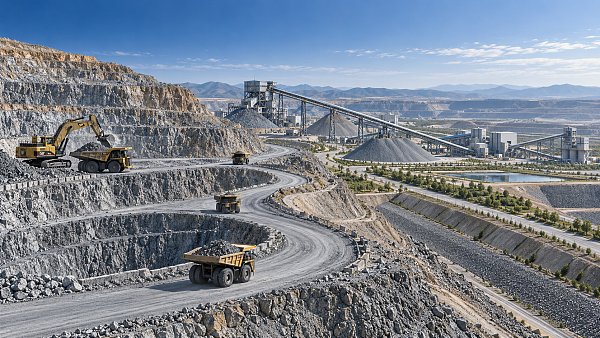
Typical assets include haul trucks, drills, dozers, loaders, water carts, and auxiliary vehicles.
The technology stack usually combines perception sensors, onboard controllers, fleet management systems, wireless networks, edge computing, and remote supervision centers.
In practice, autonomous mining technology growth depends on more than automation hardware.
It also requires stable mine design, predictable traffic flows, geofencing, digital work instructions, and strong interoperability between OEM and third-party platforms.
What counts as scale
Scale means autonomy works across shifts, weather conditions, pit phases, and maintenance cycles.
It must support measurable improvements in tons moved, incident reduction, fuel efficiency, equipment utilization, and schedule consistency.
A scalable model also survives organizational change, contractor turnover, and commodity price volatility.
Industry signals shaping autonomous mining technology growth
Several market signals explain why autonomous mining technology growth is accelerating toward 2026.
- Higher safety expectations are pushing operations to reduce human exposure in high-risk zones.
- Ore bodies are becoming more complex, increasing the need for consistency and data-driven control.
- Labor shortages and skills gaps are forcing sites to redesign workforce models.
- ESG targets are linking productivity to energy use, idle time, and emissions performance.
- Digital twin maturity is improving planning accuracy and operational feedback loops.
What systems actually scale
Not every autonomous solution scales at the same pace.
The best-performing categories share three traits: repeatable task structure, controlled operating zones, and strong integration with dispatch and maintenance systems.
1. Autonomous haulage systems
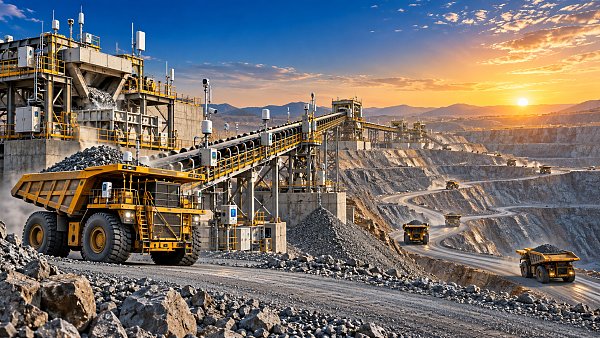
Autonomous haulage remains the leading engine of autonomous mining technology growth.
Haul roads are structured, routes are repetitive, and value capture is easy to measure.
When supported by good road design and dispatch discipline, autonomous trucks can improve cycle stability and reduce unplanned stops.
2. Autonomous drilling
Drilling scales well because pattern accuracy and repeatability directly affect downstream blasting and fragmentation.
Automated drilling also produces higher-quality data for geology models and production planning.
3. Underground loader and truck automation
Underground autonomy is advancing quickly where ventilation limits, heat, and personnel exposure create strong business cases.
However, scaling remains harder because headings change often and communications environments are less forgiving.
4. Semi-autonomous support equipment
Dozers, graders, and water carts often scale through assisted autonomy first.
That path can deliver practical gains without forcing a full operating model redesign on day one.
Business value beyond labor substitution
A narrow labor-saving view misses the full value of autonomous mining technology growth.
The larger gains often come from process stability, equipment health, and planning confidence.
- Safer separation between people and heavy mobile equipment
- More consistent cycle times and reduced operating variance
- Lower fuel burn through smoother routing and reduced idle behavior
- Better tire, brake, and drivetrain life through controlled driving patterns
- Stronger production forecasting through continuous operational data
In many operations, these gains reinforce one another.
More stable fragmentation improves loading. Better loading improves hauling. Better hauling improves crusher feed consistency and energy performance.
Some technical intelligence platforms still support early benchmarking through reference resources like 无.
Site conditions that determine scaling success
Autonomous mining technology growth is highly sensitive to local operating conditions.
The same equipment can perform differently across sites because scale depends on mine design discipline.
Typical deployment scenarios in 2026
The most realistic growth path is selective expansion, not full-site autonomy from the start.
- Large open-pit iron ore and copper sites with standardized haul circuits
- Remote mines with limited workforce availability and high logistics costs
- Underground operations where exposure reduction is a top safety priority
- Greenfield projects designed around autonomy from the earliest engineering phase
- Brownfield sites using phased automation around bottleneck zones
Greenfield projects usually scale faster because roads, control rooms, and communications are designed for autonomy from the outset.
Brownfield operations can still succeed, but retrofit complexity often slows autonomous mining technology growth.
Implementation priorities and risk controls
For 2026 planning, successful programs should focus on practical foundations before fleet-wide rollout.
- Map high-value routes, tasks, and interactions before selecting autonomy scope.
- Define clear KPIs for safety, availability, throughput, and energy use.
- Stress-test network resilience and fallback modes under real production conditions.
- Build maintenance routines for sensors, software versions, and calibration control.
- Use staged governance reviews to validate each expansion step.
It is also important to avoid vendor lock-in where possible.
Interoperability, data ownership, and integration standards will shape long-term returns more than short-term pilot performance.
Technical review sources such as 无 may help compare architecture assumptions during early planning.
Next-step outlook for autonomous mining technology growth
Autonomous mining technology growth in 2026 will reward disciplined operators more than experimental ones.
The winners will be sites that align mine planning, digital infrastructure, fleet engineering, and safety governance into one operating model.
A practical next step is to rank deployment zones by repeatability, risk exposure, and measurable production value.
From there, build a phased roadmap covering network readiness, equipment compatibility, workforce transition, and ESG reporting metrics.
That approach turns autonomous mining technology growth from a promising concept into a scalable industrial capability.
Recommended News
 Oct 06, 2026When mining intelligence services improve mine planning decisionsMining intelligence services help teams challenge assumptions, reduce supply and ESG risks, and build resilient mine plans with stronger equipment, processing, and scheduling decisions.
 Oct 05, 2026When do digital signage solutions improve safety alerts at mine sites?Digital signage solutions improve mine safety alerts with timely, location-specific warnings for blasting, haul roads, weather, and restricted access.
 Oct 01, 2026What to assess in a mining technology provider for digital mine projectsMining technology provider selection made practical: assess integration, data ownership, cybersecurity, field reliability, lifecycle support, and measurable digital mine value.
 Sep 22, 2026When life sciences need a mine digital twin to improve planningLife sciences leaders can use a mine digital twin approach to test facility constraints, reduce lifecycle risk, and make smarter capital planning decisions.