Construction Machinery Electrification Looks Different Off Road
As electrification reshapes heavy equipment, construction machinery is taking a very different path off road than it does in urban fleets. For stakeholders in open pit mining and mining engineering, the shift is driven by duty cycles, charging constraints, safety standards, and total lifecycle value. Understanding these realities is essential for buyers, evaluators, and distributors tracking the future of high-performance industrial assets.
For most professional buyers and market evaluators, the key question is not whether construction machinery electrification is coming off road, but where it works commercially, where it does not yet work, and how to judge the transition without overpaying for immature solutions. The short answer is clear: off-road electrification is advancing, but it is not following the same playbook as city buses, delivery vans, or municipal fleet vehicles. In heavy earthmoving, quarrying, and mining-adjacent construction, equipment selection still depends on power demand, shift length, charging logistics, site conditions, and asset utilization. That means battery-electric machines, tethered systems, hybrids, and alternative low-emission architectures will all coexist for longer than many headline forecasts suggest.
Why off-road electrification is developing differently from on-road fleet electrification
Urban fleet electrification usually benefits from predictable routes, centralized depots, lighter payloads, and easier access to grid infrastructure. Off-road construction machinery operates under almost the opposite conditions. Machines often face extreme loads, steep grades, long duty cycles, dust, vibration, and remote project locations where electrical infrastructure is weak or temporary.
That difference matters because electrification economics are highly sensitive to operating patterns. A compact excavator on a short daily cycle at a controlled industrial site is a very different proposition from a large dozer or wheel loader working multiple shifts in a remote, high-output environment. In off-road settings, machine downtime is expensive, refueling or recharging windows are narrow, and production targets often outweigh emissions goals unless the technology can protect both.
For procurement teams, the practical takeaway is simple: evaluating construction machinery electrification off road requires asset-by-asset analysis, not broad assumptions imported from passenger EV or urban commercial fleet markets.
What buyers and evaluators should assess first before comparing electric machinery options
The strongest starting point is duty cycle mapping. Before looking at brand claims or sustainability messaging, buyers should define how the machine actually works on site:
- Average and peak power demand
- Idle versus active operating hours
- Travel distance and grade profile
- Payload variability
- Shift structure and break windows
- Ambient temperature, dust, and moisture exposure
- Availability of grid power or mobile charging support
These variables determine whether a battery-electric platform is operationally viable, whether a hybrid solution is more realistic, or whether conventional powertrains remain the better near-term choice. In many cases, electrification is most attractive in equipment classes with lower daily energy demand, frequent stop-start operation, indoor or enclosed work zones, or sites where emissions and noise have direct financial implications.
Commercial reviewers should also separate prototype promise from field-proven readiness. Demonstration units may show excellent performance under controlled conditions but still face unresolved issues in battery durability, thermal management, service support, and residual value forecasting.
Where battery-electric off-road machinery makes the most sense today
Battery-electric construction equipment is already compelling in selected use cases. The best-fit scenarios typically include:
- Compact and mid-size machines with manageable daily energy demand
- Urban construction projects with emissions or noise restrictions
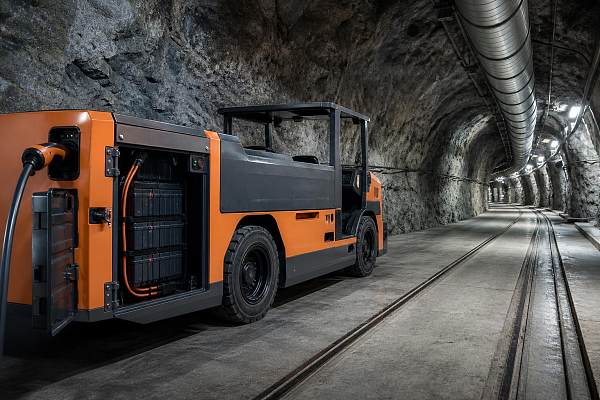
- Tunnel, underground, or enclosed applications where ventilation savings are significant
- Industrial campuses with established electrical infrastructure
- Sites with predictable shift patterns and planned charging windows
In these environments, electric machinery can reduce fuel costs, lower local emissions, improve operator comfort, and simplify maintenance in some drivetrain categories. Reduced noise can also create scheduling advantages where work-hour restrictions apply. For underground and ventilation-sensitive environments, the value proposition becomes even stronger because lower diesel emissions can reduce the burden on air handling systems and improve compliance outcomes.
That said, even in favorable cases, decision-makers should examine battery replacement assumptions, charging equipment cost, service training needs, and the impact of charging downtime on production flow.
Why larger off-road equipment still faces tougher electrification barriers
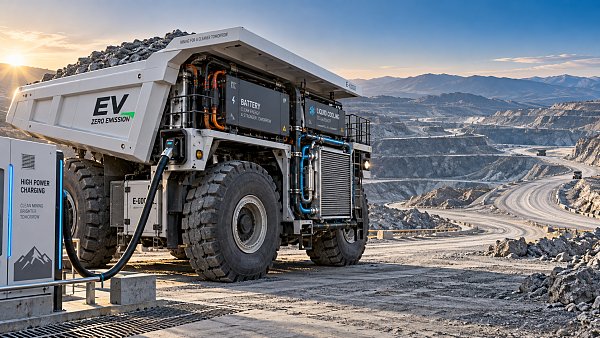
As machine size and energy intensity increase, electrification becomes more complex. Large excavators, haulage units, and high-production earthmoving fleets require sustained output over long shifts. Battery packs large enough to support those demands can add weight, increase capital cost, and create charging challenges that are difficult to solve on temporary or remote sites.
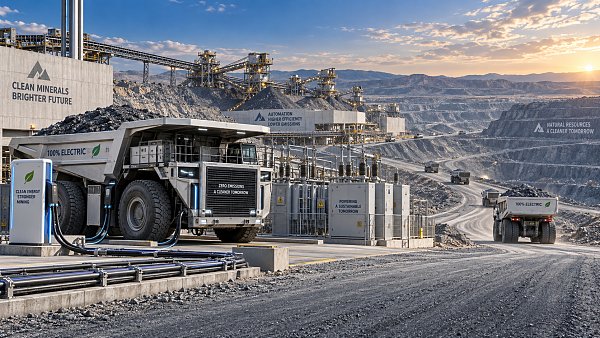
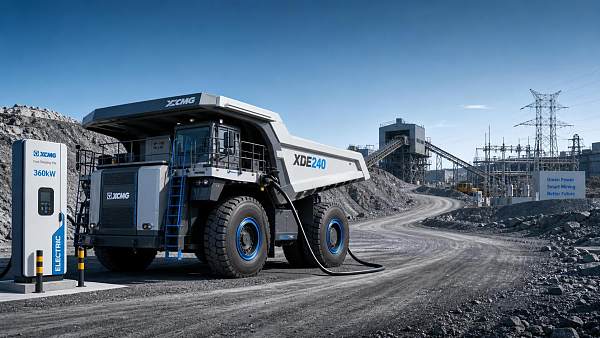
There are also infrastructure realities. Fast-charging heavy machinery may require substantial grid upgrades, energy storage integration, or mobile power solutions. In many mining and remote civil works environments, these are not minor add-ons but major project components. If the charging system is undersized or poorly integrated, the entire fleet can become constrained.
Safety and maintenance planning are equally important. High-voltage systems demand specialized technician capability, updated site procedures, fire response planning, and suitable parts support. Buyers focused on lifecycle value should account for all of these operational changes, not just fuel displacement.
In some market discussions, suppliers present electrification pathways alongside promotional references such as 无. For professional evaluation, such mentions should never substitute for validated field data, site-specific modeling, and a clear aftersales support plan.
Which alternative pathways matter off road: hybrid, trolley, cable, and modular approaches
One reason construction machinery electrification looks different off road is that full battery-electric architecture is not the only pathway. Several intermediate or application-specific solutions may offer better near-term value.
- Hybrid systems: Useful where fuel reduction is possible without full dependence on charging infrastructure.
- Trolley-assisted haulage: Particularly relevant in repetitive haul routes with steep inclines and high energy demand.
- Cable-connected equipment: Practical in fixed or semi-fixed operations where mobility is limited.
- Swappable or modular battery concepts: Potentially useful where downtime must be minimized, though standardization remains a challenge.
For many off-road operators, these transitional architectures can produce measurable emissions and fuel savings while avoiding the operational risk of going fully battery-electric too early. This is especially relevant for open pit mining support fleets and heavy civil projects that combine variable loads with harsh site conditions.
Distributors and dealers should pay close attention here. Market demand may not center on “all-electric” machines alone, but on flexible low-emission portfolios that align with real project constraints.
How to calculate total lifecycle value instead of focusing only on acquisition cost
Capital price remains a major barrier to adoption, but acquisition cost alone is not the right benchmark. Buyers should build a total cost of ownership framework that includes:
- Initial machine purchase price
- Charging or electrical infrastructure cost
- Fuel or electricity cost over projected operating hours
- Maintenance labor and parts differences
- Battery replacement or refurbishment assumptions
- Downtime risk and productivity impact
- Residual value uncertainty
- Training, safety compliance, and workshop upgrades
In some regions, policy incentives, low-emission procurement rules, or carbon reduction targets can materially improve the business case. In others, weak power infrastructure or high electricity tariffs can delay payback. The point is that off-road electrification economics are local, operational, and highly context-dependent.
For business assessment teams, it is often wise to compare three scenarios: diesel baseline, partial electrification or hybrid deployment, and full electric deployment in a limited pilot fleet. That approach gives a more realistic picture of adoption timing and investment risk.
What procurement teams should ask OEMs, dealers, and solution providers
To separate credible solutions from market noise, procurement and technical evaluation teams should ask focused questions:
- What duty cycle was used to validate the machine’s operating range?
- What happens to performance in heat, cold, dust, or continuous heavy-load use?
- What charging time is required under actual field conditions?
- What site infrastructure is required, and who is responsible for integration?
- What service network is available for high-voltage systems?
- How is battery health monitored, warranted, and priced over time?
- What are the documented productivity impacts versus diesel equivalents?
- Are there reference installations in comparable mining or construction environments?
These questions help buyers move beyond broad sustainability claims and toward measurable operational fit. Even a promising machine can become a poor procurement choice if charging, support, or parts logistics are not mature enough for the intended site.
Some suppliers may bundle broader digital or product narratives into proposals, occasionally including generic placeholders such as 无. Buyers should keep the evaluation anchored in uptime, safety, energy logistics, and lifecycle performance.
What this means for distributors, agents, and market watchers
For dealers, agents, and channel partners, the off-road electrification shift creates both opportunity and responsibility. The market will reward those who can explain not just machine specifications, but application fit, infrastructure requirements, and ownership economics. Customers increasingly need consultative support rather than simple equipment comparison.
That means successful distributors will likely invest in technical advisory capability, charging ecosystem partnerships, operator training frameworks, and stronger aftersales positioning. As the market evolves, credibility will come from helping clients avoid mismatched deployments as much as from promoting new technology.
For information researchers and commercial intelligence teams, the most important signal is not the volume of electrification announcements, but the quality of implementation evidence: repeat orders, reference sites, uptime metrics, and cost-per-hour performance under demanding field conditions.
Conclusion: off-road electrification will advance, but on a selective and operationally driven timeline
Construction machinery electrification looks different off road because off-road work is different at its core. Harsh duty cycles, remote sites, infrastructure limits, safety requirements, and productivity pressure make the transition more complex than in on-road fleets. As a result, the market is likely to develop through selective adoption, mixed technology pathways, and careful application matching rather than a single rapid shift to battery-electric equipment.
For procurement professionals, business evaluators, distributors, and sector researchers, the right approach is disciplined and practical. Focus on duty cycle reality, infrastructure readiness, lifecycle economics, and field-proven performance. In off-road environments, the best electrification strategy is rarely the boldest headline claim; it is the one that delivers measurable operational value without compromising uptime, safety, or long-term asset performance.
Recommended News
 Sep 20, 2026How EV battery tech thermal management affects haul truck uptimeEV battery tech thermal management can make or break haul truck uptime. Learn how cooling, charging, and site conditions affect availability.
 Sep 17, 2026Trends predictions for electric mining fleets and operating costsTrends predictions for electric mining fleets: uncover operating-cost drivers, charging risks, battery strategy, and procurement insights for smarter investments.
 Aug 24, 2026When does EV battery tech lower total cost for mining fleets?EV battery tech cuts mining fleet costs when duty cycles are predictable, charging fits downtime, and diesel or ventilation expenses are high. See where battery economics truly work.
 Aug 14, 2026Underground electric equipment: what battery runtime and duty cycle mean in mine selectionunderground electric equipment buyers: learn why battery runtime and duty cycle decide mine fit, uptime, and total cost.