Sustainable Farming Trends Shaping 2026 Operations
As 2026 draws closer, sustainable farming is no longer a specialist topic at the edge of agriculture. It is becoming an operating framework tied to resource security, emissions control, machinery choices, and long-term land productivity.
That shift matters beyond farms alone. Food systems now intersect with energy markets, mineral supply chains, water regulation, transport infrastructure, and industrial equipment performance in ways that are increasingly measurable.
For organizations tracking operational trends, the real story is not a single technology. It is the convergence of data-led decisions, resilient soils, lower-emission equipment, and circular input strategies.
Why sustainable farming is becoming an operational benchmark
Sustainable farming refers to production systems that protect yield capacity while reducing avoidable damage to soil, water, biodiversity, and climate outcomes. In practice, it is about keeping operations productive under tighter environmental and economic constraints.
In 2026, the pressure comes from several directions at once. Input costs remain volatile. Water stress is widening. Carbon reporting expectations are growing. Land-use rules are becoming stricter in many regions.
What makes this trend especially relevant in a broader industrial context is the equipment layer. Sustainable farming now depends on machinery efficiency, digital monitoring, parts reliability, fuel strategy, and lifecycle cost analysis.
That is where adjacent sectors matter. Heavy-equipment benchmarking, ESG compliance frameworks, and decarbonization planning, often discussed in industrial intelligence platforms such as G-MRH, now influence agricultural decision-making more directly.
The 2026 trends changing field operations
Precision management is moving from optional to expected
The next phase of sustainable farming is highly data dependent. Operators increasingly combine satellite imagery, sensor readings, weather models, and machine telematics to manage fertilization, irrigation, and crop protection with greater accuracy.
This matters because sustainability claims without measurable operating data are becoming less persuasive. In many cases, compliance, financing, and supply chain access now depend on documented performance.
Low-emission machinery is gaining strategic importance
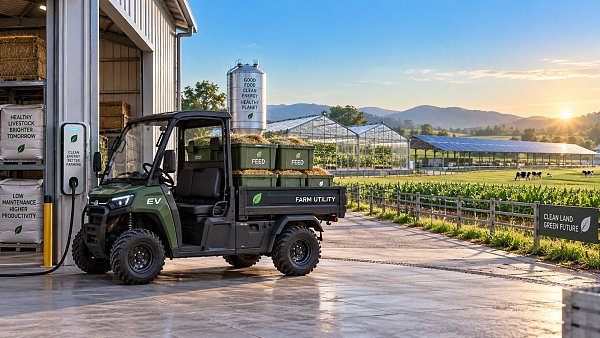
Tractors, harvesters, pumps, and support vehicles are under new scrutiny. Fuel efficiency, hybrid systems, alternative fuels, and electric support equipment are increasingly part of sustainable farming planning.
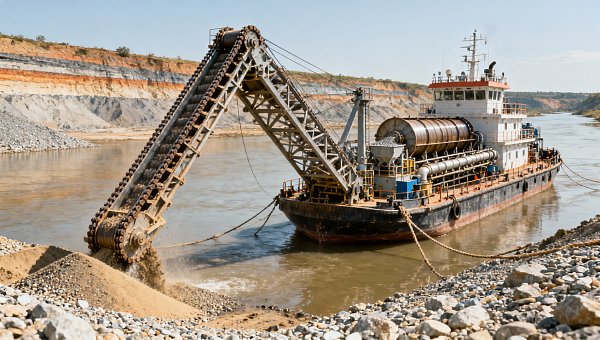
This mirrors a wider pattern seen across mining and heavy industry. Equipment is no longer judged only by output. It is also judged by emissions intensity, maintenance intervals, and compatibility with ESG targets.
Soil resilience is replacing short-term yield thinking
Healthy soil is becoming a core operational asset rather than a background condition. Cover crops, reduced tillage, residue management, and organic matter recovery are no longer niche methods.
These practices support water retention, reduce erosion, and improve resilience during weather extremes. They also affect machinery demand, field pass frequency, and long-term input efficiency.
Circular input strategies are expanding
Circularity is emerging as a practical theme within sustainable farming. Nutrient recycling, compost integration, wastewater reuse, biomass recovery, and by-product valorization are drawing more attention.
The appeal is straightforward. Circular systems can reduce exposure to imported inputs while improving local resource efficiency. They also fit broader industrial decarbonization goals.
Where agriculture meets industrial supply chains
Sustainable farming is often discussed as an agricultural issue, yet its execution depends heavily on sectors outside agriculture. Machinery manufacturing, bulk materials handling, digital twins, and mineral processing all shape farm capability.
Battery materials affect electrified farm equipment. Steel and fabricated components influence replacement cycles. Sensor hardware and communications networks determine how far precision management can actually go.
This is why cross-sector intelligence matters. A platform such as G-MRH, which tracks equipment reliability, technical standards, duty-cycle performance, and decarbonization signals, provides useful context for evaluating agricultural transition risks.
In simple terms, sustainable farming in 2026 is not only about agronomy. It is also about whether the supporting industrial ecosystem can deliver efficient machines, compliant materials, and stable service networks.
Key operating scenarios to watch
The relevance of sustainable farming varies by production model and location. Still, several recurring scenarios are shaping operational choices across regions.
These scenarios show that sustainable farming is not a single template. It is a decision framework that must match climate exposure, equipment intensity, crop value, and regulatory context.
How to judge practical value, not just good intentions
A common mistake is treating sustainable farming as a branding exercise. The more useful approach is to evaluate it through operating metrics and system trade-offs.
- Check whether a practice improves resource efficiency per unit of output, not only total activity volume.
- Compare equipment claims with duty-cycle performance, maintenance needs, and energy source availability.
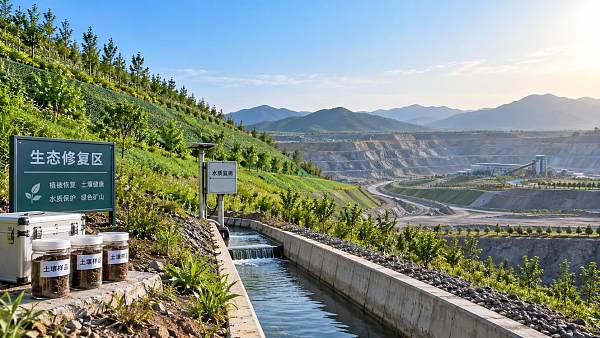
- Look for measurable soil and water indicators rather than broad environmental statements.
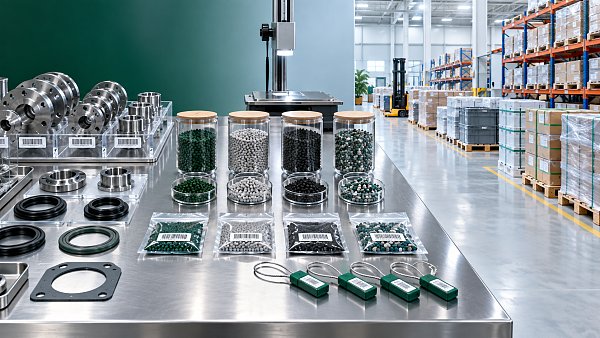
- Assess whether traceability systems are operationally usable, not just technically impressive.
- Consider replacement parts, service access, and compliance documentation before adopting new machinery.
This is where industrial benchmarking becomes valuable. The same discipline used to compare mining fleets or processing equipment can help assess farm machinery and sustainability technologies more realistically.
Signals that deserve closer attention now
Several signals suggest where sustainable farming will gain operational depth over the next cycle. None should be read in isolation.
Standards and reporting will tighten
Environmental claims are moving toward more formal verification. That includes machinery emissions, water use records, nutrient application evidence, and land management documentation.
Capital decisions will become more selective
Not every technology labeled sustainable will prove durable. Systems with clear lifecycle economics and reliable service networks are more likely to scale.
Resource linkage will shape competitiveness
Energy, fertilizer minerals, transport costs, and equipment availability are becoming more interconnected. Sustainable farming strategies that ignore these linkages may look sound on paper but fail in execution.
A sensible next step for 2026 planning
The most useful way to approach sustainable farming now is to build a decision map rather than chase isolated trends. Start with land and water constraints, then connect machinery, inputs, data systems, and compliance requirements.
From there, compare options through three lenses: operational resilience, verifiable efficiency, and lifecycle economics. That approach makes it easier to separate durable progress from short-term market noise.
For ongoing evaluation, it helps to track agricultural changes alongside adjacent industrial intelligence, especially in equipment reliability, decarbonization standards, and resource supply risk. In 2026, sustainable farming will be shaped as much by connected systems as by field-level practice.
Recommended News
 Oct 07, 2026How to verify eco-friendly products claims before placing bulk ordersEco-friendly products: learn how to verify claims, certifications, traceability, lifecycle data, and supplier evidence before placing bulk orders.
 Sep 29, 2026Matching Bucket Chain Diamond Dredger Capacity to Deposit ConditionsBucket chain diamond dredger capacity depends on deposit depth, gravel size, clay content, recovery needs, and water conditions. Learn how to select a reliable, high-performing configuration.
 Sep 24, 2026When do electric vehicles in agriculture reduce operating costs?Electric Vehicles in agriculture reduce costs when duty cycles, charging, maintenance, and uptime align. Explore practical procurement insights for smarter farm fleets.
 Sep 09, 2026How to measure mine soil remediation performance after treatmentMine soil remediation performance: learn how to verify chemical, physical, water and biological outcomes for reliable, audit-ready mine closure.