Sustainability Benchmarking: What Metrics Matter Most
Sustainability benchmarking has become a practical management tool, not a reporting exercise. In mining, resources, and heavy machinery, the right metrics shape equipment choices, permit confidence, operating resilience, and capital discipline across long project cycles.
That matters even more as commodity volatility, energy transition pressure, and tighter standards push every asset to prove both productivity and environmental credibility. A useful benchmark does not track everything. It highlights what changes decisions.
What sustainability benchmarking really measures
At its core, sustainability benchmarking compares performance against a defined peer set, baseline, or technical standard. The purpose is to see whether an operation, supplier, or fleet performs better, worse, or simply differently.
In heavy industry, this comparison must connect ESG expectations with engineering reality. A zero-emission claim means little if uptime falls, safety exposure rises, or lifecycle cost becomes unmanageable.
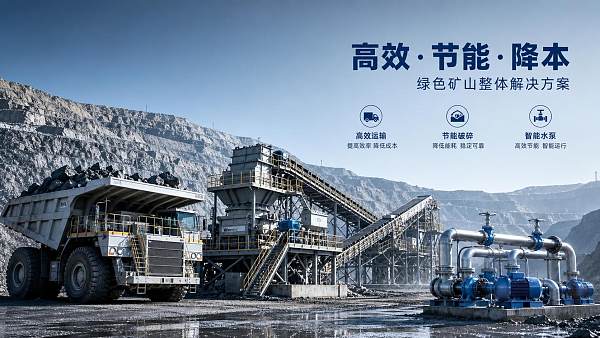
The strongest sustainability benchmarking frameworks combine operational data, compliance evidence, and asset context. They do not treat a haul truck, crushing plant, and bulk handling system as if they share identical risk profiles.
Why the topic is moving to the center of decision-making
Heavy industrial projects now sit under overlapping pressures. Carbon intensity targets are rising. Water access is becoming more sensitive. Community scrutiny is sharper. Investors increasingly test whether reported progress is measurable.
At the same time, procurement and project delivery cannot afford abstract indicators. Large equipment programs need metrics that explain duty-cycle efficiency, maintenance burden, and compliance exposure in the same conversation.
This is where platforms such as G-MRH add value. By linking benchmark data to ISO references, AS/NZS expectations, Mine Safety Acts, and field performance, sustainability benchmarking becomes decision support rather than presentation material.
The metrics that matter most
Not every metric deserves equal weight. The most useful set usually combines environmental load, operational reliability, regulatory fit, and economic durability.
1. Carbon intensity per unit of output
This is often the headline metric, but it needs context. Measure emissions per tonne moved, processed, or produced, not just total emissions across a site or fleet.
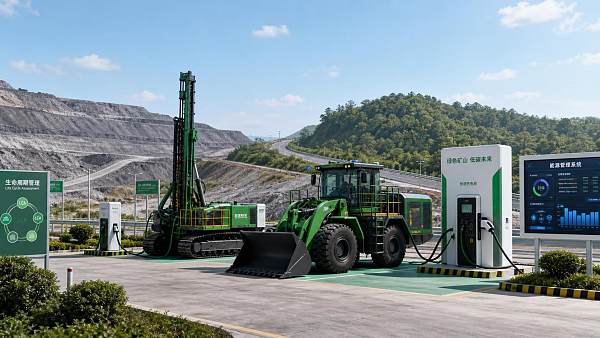
That approach helps compare diesel fleets, hybrid systems, electrified equipment, and process upgrades on a like-for-like basis. It also shows whether decarbonization is operationally efficient.
2. Energy intensity and energy source mix
Energy intensity reveals how much energy is needed for each production outcome. Source mix shows how much comes from grid power, on-site generation, renewables, or fossil fuels.
Together, these metrics explain more than carbon alone. Two operations may report similar emissions today, yet one has far stronger transition potential because its energy architecture is more adaptable.
3. Water withdrawal, reuse, and discharge quality
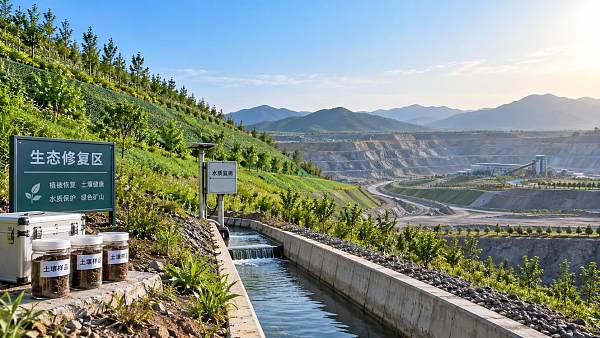
Water metrics are critical in mineral processing, dust suppression, and remote site operations. Total withdrawal matters, but recycling rate and discharge quality often say more about long-term site resilience.
Benchmarking should reflect local hydrology. A mine in a water-stressed basin cannot be judged by the same thresholds as a site with stable supply and lower catchment pressure.
4. Waste, tailings, and material recovery efficiency
For extractive and processing assets, waste indicators are central to sustainability benchmarking. Recovery rate, ore-to-waste ratio, tailings handling discipline, and secondary material reuse all shape risk and value.
A site with better recovery efficiency may reduce both environmental footprint and unit cost. That is exactly the kind of dual benefit benchmark users should look for.
5. Equipment reliability under sustainable operating conditions
This metric is often missed. Low-emission equipment only creates value when availability, mean time between failures, and maintenance performance remain stable in actual field conditions.
For autonomous haulage, electric excavators, or high-efficiency crushing circuits, sustainability benchmarking should include uptime under load, not just design specifications.
6. Safety and compliance indicators
Sustainability is incomplete without worker exposure, incident rates, dust control, noise management, and adherence to statutory rules. A lower-emission system that introduces unsafe maintenance routines is not a sustainable improvement.
This is especially relevant where equipment modernization intersects with mine safety law, electrical standards, and contractor operating procedures.
7. Lifecycle cost per sustainable performance gain
Projects rarely fail because sustainability targets are wrong. They fail because the cost path was misunderstood. Benchmarking should connect emissions, water, and waste gains to capex, opex, serviceability, and asset life.
This allows better comparisons between retrofits, fleet replacement, process redesign, and digital optimization strategies.
How metric priorities change by industrial context
The same benchmark set does not fit every asset class. Priorities shift across the five industrial pillars that shape the G-MRH view of the market.
From an operational perspective, this prevents a common mistake. Teams often overvalue headline carbon numbers while underweighting water constraints, recoverability, or reliability losses that later erode performance.
What separates a useful benchmark from a weak one
A credible benchmark is built on comparable boundaries. It defines whether data covers extraction, processing, transport, maintenance, or full lifecycle impacts.
It also uses peer groups that make sense. Comparing a mature Australian iron ore operation with an early-stage copper project in a fragile power market can distort conclusions.
The strongest sustainability benchmarking programs usually share several traits:
- Metrics are normalized by output, duty cycle, or operating hours.
- Data sources are auditable and tied to technical records.
- Standards and local regulations are mapped explicitly.
- Performance is reviewed over time, not at one reporting point.
- Trade-offs between emissions, safety, and cost are visible.
Where industrial assets are complex and capital-heavy, transparency matters as much as ambition. Decision quality improves when benchmark logic can be challenged, tested, and updated.
Applying sustainability benchmarking in real projects
In practice, sustainability benchmarking works best when used at three points. The first is option screening, where early choices narrow acceptable technologies and suppliers.
The second is procurement and contract evaluation, where technical claims need proof against duty-cycle performance, compliance obligations, and supportability.
The third is operational review, where actual performance is tested against business case assumptions. This is where digital twins and field telemetry become especially valuable.
A practical workflow often starts with a short metric set, then expands only when a project faces site-specific risks. Simple dashboards usually outperform crowded scorecards.
Questions worth asking before adopting any benchmark
- Does the metric influence a real engineering or commercial decision?
- Is the data measured consistently across sites and suppliers?
- Can the result be linked to compliance, uptime, or lifecycle cost?
- Does the comparison reflect local operating conditions?
- Are short-term gains hiding long-term maintenance or safety risks?
Where to focus next
The next step is not to collect more indicators. It is to refine the few that connect sustainability intent with technical and commercial outcomes.
For most heavy industrial settings, that means starting with carbon intensity, energy use, water performance, recovery efficiency, safety exposure, reliability, and lifecycle cost.
From there, sustainability benchmarking becomes a structured way to compare fleets, suppliers, and site strategies against real operating demands. When benchmark data is grounded in standards, field performance, and regional context, it becomes far more than ESG reporting. It becomes a disciplined basis for better project decisions.
Recommended News
 Sep 09, 2026How to measure mine soil remediation performance after treatmentMine soil remediation performance: learn how to verify chemical, physical, water and biological outcomes for reliable, audit-ready mine closure.
 Sep 02, 2026Which Green Mining Certifications Should Equipment Buyers Look for in 2026?What green mining certifications should equipment buyers look for in 2026? Explore ISO standards, emissions compliance, battery safety, lifecycle data, and sourcing proof.
 Aug 30, 2026How low-waste packaging machinery reduces material lossSustainable packaging machinery low waste strategies reduce film, bag, and carton loss while protecting industrial loads. Explore smarter controls, data, and proven evaluation steps.
 Aug 21, 2026Where energy efficient mining equipment trends are cutting costs firstEnergy efficient mining equipment trends are cutting costs first in haulage, comminution, ventilation, pumping, and conveying. See where early savings and smarter upgrades deliver faster ROI.